Slavery Exhibit at President’s House Site Replaced Overnight
Slavery Exhibit at President’s House Site Replaced Overnight, Stirring Outrage in Philadelphia
- Exhibit panels removed from President's House site, shifting focus away from enslaved people's stories
- Backlash from local advocates, clergy, and officials who say removal undermines public trust and distorts history
- Dispute over who controls public memory at a founding landmark, and whether slavery is central or marginalized
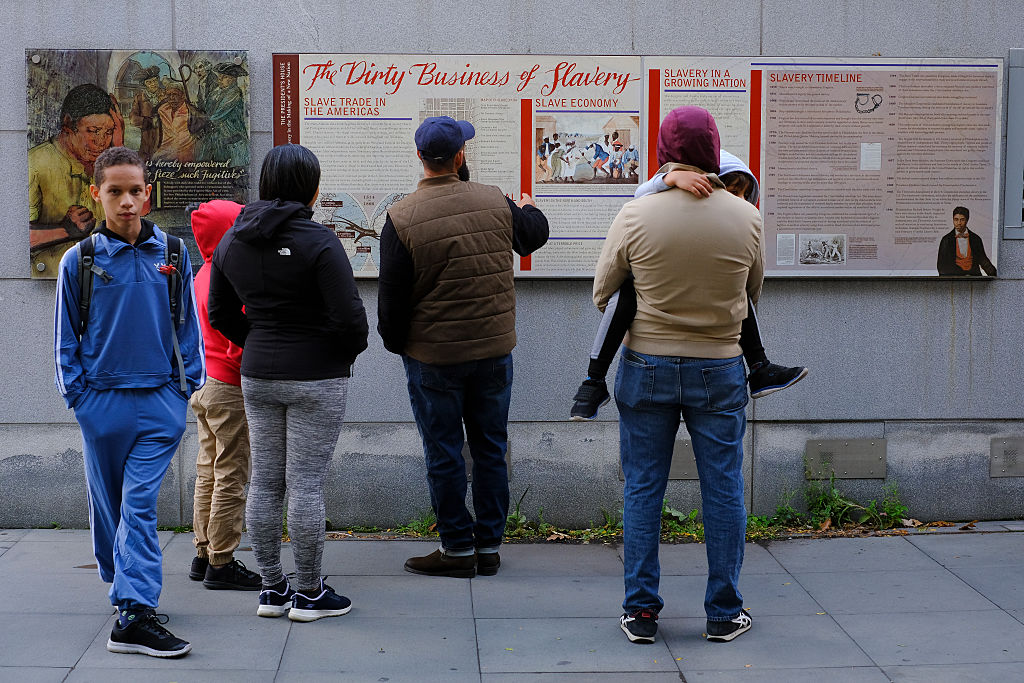
Slavery Exhibit at President’s House Site Replaced Overnight, Stirring Outrage in Philadelphia
A yearslong fight over how slavery is remembered at one of Philadelphia’s most symbolic historic sites escalated sharply this week after the federal government replaced exhibit panels at the President’s House site with new displays critics say soften the brutality of slavery and dilute the stories of the nine enslaved people once held there.
The new panels were installed overnight at the site of George Washington’s former Philadelphia home near Independence Mall, where the original exhibit had stood since 2010. That earlier installation centered on the lives of the nine enslaved people who lived at the President’s House while Philadelphia briefly served as the nation’s capital in the 1790s.
The replacement exhibit shifts emphasis toward broader American history, the significance of the President’s House, and George Washington’s changing views on slavery. While the revised panels still reference slavery and the enslaved people connected to the site, critics say key details have been stripped away, including sharper language, deeper historical framing, and exhibit elements that directly confronted the mechanics and violence of enslavement.
Among the removed elements, according to reports, were features such as a map of slave trade routes, a slavery timeline, and more explicit headings including “The Dirty Business of Slavery.”
The change has triggered immediate backlash from local advocates, clergy, preservationists, and city officials. Philadelphia Mayor Cherelle Parker condemned the overnight removal, saying the way it was carried out undermined public trust and signaled the federal government understood the move would be seen as shameful. Rev. Carolyn Cavaness of Mother Bethel AME Church similarly criticized the timing, describing the removal as something done “like a thief in the night.”
The dispute has been building for months. The Trump administration had moved earlier this year to remove the original panels following a broader executive order directing federally controlled historic sites not to present material seen as disparaging to Americans and instead emphasize national achievement and progress. Critics say that policy has fueled efforts to sanitize darker chapters of U.S. history at museums, memorials, and historic landmarks.
The legal battle over the site also intensified this summer. Philadelphia had initially won a lower-court ruling that temporarily blocked the federal government from proceeding, but the U.S. Court of Appeals for the 3rd Circuit later ruled that the lower court lacked jurisdiction and allowed the changes to move forward, affirming federal control over the property.
The Interior Department has defended the revised exhibit, saying the new panels provide historical context, acknowledge the evils and hypocrisy of slavery, and continue to recognize the humanity of the nine enslaved people connected to the house.
Still, opponents argue the new installation recasts the site’s moral center. Volunteers with local preservation efforts have continued reading the removed stories aloud from binders at the site, while groups including Avenging the Ancestors Coalition and the city say they are pursuing further legal options.
For many in Philadelphia, the battle is no longer just about signage. It is about who controls public memory at one of the nation’s founding landmarks — and whether slavery is treated as central to the American story or pushed to its margins.


Slavery Exhibit at President’s House Site Replaced Overnight, Stirring Outrage in Philadelphia was originally published on rnbphilly.com


